How to Track and Optimize Your Brand Mentions in ChatGPT in 2026
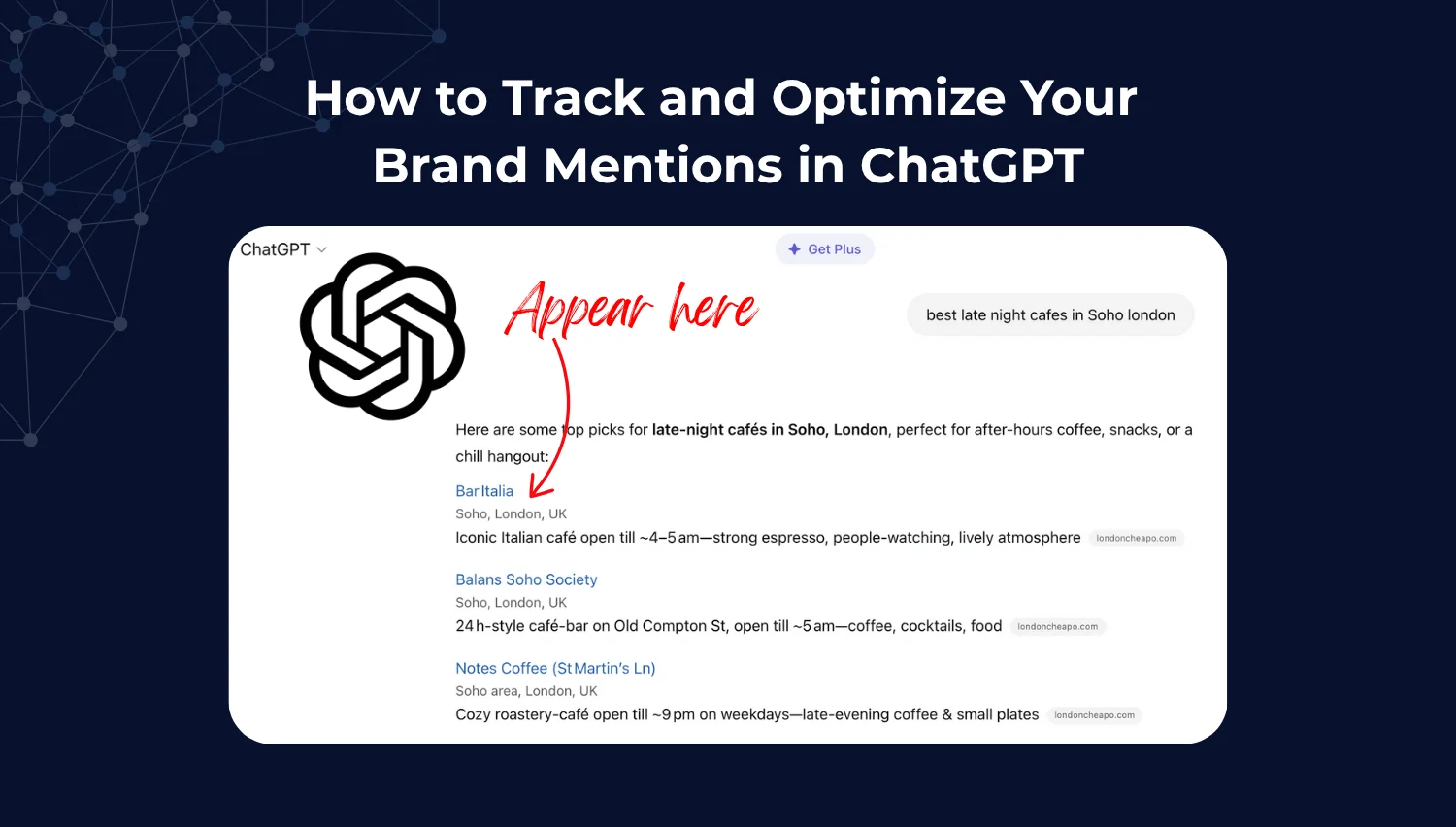
Tracking your brand mentions in ChatGPT is becoming just as important as monitoring your Google rankings. Millions of users now ask ChatGPT for recommendations, comparisons, and buying advice, and if your brand doesn’t appear (or appears inaccurately), you lose visibility long before someone reaches a search engine.
But unlike Google, ChatGPT offers no analytics, no impressions, and no Search Console. So if you want to know how ChatGPT represents your brand, which prompts you appear in, and how you compare to competitors, you need a dedicated ChatGPT rank tracking tool.
Below is exactly how to track brand mentions in ChatGPT, step-by-step, using Keyword.com’s AI Rank Tracker, plus actionable optimization strategies to improve your visibility across AI search.
How to Track Your Brand Mentions in ChatGPT (Step-by-Step)
To track your brand mentions in ChatGPT results, you need an AI rank tracker like Keyword.com, Peec.ai, or Otterly AI. Here’s how to use Keyword.com’s LLM tracker for ChatGPT monitoring.
Step 1: Sign Up for the AI Visibility Tracker
Step 2: Add Your Website and Prompts
Enter your brand name, product name, and the prompts you want to monitor. Choose a daily, weekly, or monthly tracking interval.
Step 3: Select “OpenAI GPT” as the Engine
This tells Keyword.com to track visibility specifically inside ChatGPT responses.
Step 4: Monitor Your AI Visibility Metrics
Your dashboard will populate with:
- AI Visibility Score
- Sentiment Score
- Prompts you appear in
- Competitor mentions
- Citations (sources ChatGPT is pulling from)
This is the best wayto reliably track brand visibility inside AI-generated content.
Why Tracking Brand Mentions in ChatGPT Matters
ChatGPT now shapes awareness, consideration, and even final purchasing decisions. That means your brand can win (or lose) influence before a user ever reaches Google.
Here’s why monitoring brand mentions in AI search is essential:
1. Reputation Management
ChatGPT responses may include outdated or inaccurate information. Tracking lets you spot and correct issues proactively.
2. Customer Influence
Users increasingly ask ChatGPT for “best tool,” “vs,” or “top product” queries. If your brand isn’t mentioned, you lose visibility at a critical decision stage.
3. Visibility Beyond Traditional SEO
Ranking on Google doesn’t guarantee inclusion in ChatGPT. LLMs rely on structure, authority, schema, Bing rankings, and high-trust sources, not just SERPs.
How ChatGPT Generates Brand Mentions
ChatGPT includes brand mentions by synthesizing data from:
- Its training set (Wikipedia, licensed data, web crawls)
- Real-time browsing (if enabled)
- Patterns from common user prompts
- Popular comparison or “best tools” queries
Mentions may appear as:
- Paraphrased summaries
- List inclusions
- Recommendations
- Competitor comparisons
Because ChatGPT rarely shows citations, you must rely on AI visibility tracking tools to see how you appear.
4. How ChatGPT Differs From Search Engines (And Why SEO ≠ AI Visibility)
ChatGPT is not a search engine. It behaves more like a conversational knowledge engine:
- No rankings. There is no “position 1”, only visibility or invisibility.
- No impressions or clicks. You cannot measure traffic from ChatGPT.
- No Search Console. There’s no owned data or analytics dashboard.
- Prompt-dependent. If your brand is not present in answers to common prompts, you lose AI market share.
- Synthesis over retrieval. ChatGPT rewrites information instead of linking to pages.
This is why traditional SEO tools cannot track ChatGPT, and why AI rank tracking is now a separate category.
How to Optimize Your Brand for Visibility in ChatGPT
To shape how ChatGPT mentions your brand, you need targeted strategies beyond traditional SEO. Here’s what to do:
1. Structure Content for Direct Q and A
Clearly formatted question and answer content makes it significantly easier for ChatGPT to summarize your brand accurately. ChatGPT typically scans and synthesizes information that directly matches common user queries, often favoring content structured as straightforward questions and answers. To increase your chances of accurate inclusion:
- Include headings formatted as direct questions (e.g., “What is ?”, “How does work?”, “Who should use ?”).
- Follow each question with concise, clear answers that directly address user intent without excessive jargon or fluff.
- Use bullet points and numbered lists to summarize key points, features, benefits, or comparisons clearly.
- Add short summaries or TL;DR sections that encapsulate the main message, allowing ChatGPT to easily extract precise and relevant information.
2. Strengthen Presence on High-Authority Platforms
ChatGPT’s training data heavily relies on authoritative sources. Invest in your brand presence across platforms like:
- Wikipedia
- G2, Trustpilot, and other review sites
- Crunchbase and LinkedIn company pages
- Industry publications and trusted blogs
3. Leverage Structured Data and Schema Markup
Structured data (schema.org markup) helps ChatGPT accurately understand your content during browsing sessions. Clearly marked-up content (FAQ schema, Product schema, Review schema) improves the chance of accurate inclusion.
4. Regularly Monitor and Update Online Mentions
ChatGPT’s hybrid browsing capability means it can surface outdated content. Proactively update outdated, inaccurate, or negative content across third-party sources. This ensures that the information available to ChatGPT is accurate and favorable.
5. Align Content with Common User Prompts
Identify and address commonly asked questions related to your brand or products. ChatGPT heavily prioritizes content structured around clear user intent, so your pages should directly reflect popular user queries. For example, create content that explicitly answers prompts like “Best for ,” “How to use for ,” or “ vs .”
By doing so, you make it easier for ChatGPT to pull relevant and accurate information directly from your content. Additionally, regularly researching common ChatGPT queries related to your industry helps you proactively create content that matches emerging trends, ensuring consistent brand representation across AI-generated answers.
6. Optimize for Bing Search Engine
About 87% of ChatGPT’s citations match Bing’s top results. This means that the higher your content and website ranks in Bing, the more likely it is to be pulled into ChatGPT’s responses.
Here’s how to optimize your website for Bing:
- Ensure Bing indexing: submit your sitemap and monitor crawl status in Bing Webmaster Tools so your pages are discoverable when ChatGPT performs a live lookup.
- Target top‐ranking placement: optimize title tags, meta descriptions, and on‐page content for question‐style queries (e.g., “How does solve ?”) to boost your chances of landing in Bing’s top results.
- Build authoritative signals: gain high-quality backlinks and mentions on trusted domains to strengthen your position in Bing’s rankings—and by extension, increase your visibility in ChatGPT.
Want more ChatGPT ranking tips? Check out this quick tutorial on how to get mentioned in ChatGPT results.
Track Your Brand Visibility in ChatGPT With Keyword.com
Ensuring your brand shines in ChatGPT’s AI-generated answers starts with proactive monitoring, and Keyword.com’s AI Visibility Tracker makes it effortless. With real-time inclusion rates, sentiment scoring, and prompt-level insights all in one dashboard, you can spot gaps, correct misrepresentations, and double down on the content that works.
Don’t wait for ChatGPT to surprise you. Take control of your AI-driven visibility today. Start tracking your brand in ChatGPT with Keyword.com and turn every mention into an opportunity.
Tracking Brand Mentions in ChatGPT FAQs
Got more questions about tracking your brand in ChatGPT? You’ll find some answers below.
1. How Can My Brand Appear in ChatGPT Answers?
To appear in ChatGPT answers, your brand needs to be a part of its training dataset or the sources it pulls real-time information from. To increase your chances of getting cited or mentioned in ChatGPT responses:
- Optimize your website and content for Bing.
- Structure your content like you’re answering a prompt with clear headings and bullet points.
- Use schema markup. FAQ, HowTo, and Product schema help ChatGPT extract and summarize your content accurately.
Read more: Answer Engine Optimization Strategies: What Top Brands Do to Keep Getting Cited
2. How Do I Track Brand Mentions in AI Search (ChatGPT, Perplexity, Gemini)?
Traditional SEO tools cannot track AI search because LLMs don’t produce SERPs. To track brand mentions in AI search, you need an AI visibility tracker that monitors generative answers directly. Keyword.com’s AI Rank Tracker reveals when your brand appears in ChatGPT, Perplexity, Gemini, and Claude, including visibility score, sentiment, and competitor mentions.
3. What Is a ChatGPT Rank Tracker?
A ChatGPT rank tracker measures how often your brand or website appears in ChatGPT’s generated responses. Instead of URL rankings (like Google), it tracks:
- inclusion frequency,
- sentiment,
- competitor mentions,
- and which prompts you “rank” for.
Keyword.com is currently one of the only tools offering ChatGPT SEO rank tracking at scale.
4. How Does ChatGPT SEO Rank Tracking Work?
ChatGPT SEO rank tracking analyzes prompts that consumers commonly use, such as “best tools for ___,” “how to ___,” or “ vs ” — and measures whether ChatGPT includes your brand in its answer. Keyword.com’s tracker gives each mention an AI ranking score, making AI visibility measurable like traditional SEO.
Related: When AI Should (And Shouldn’t) Impact Your Keyword Strategy
6. Is There a Rank Tracking Tool for ChatGPT That Works Online or Free?
You can’t track ChatGPT SEO for free manually because ChatGPT does not reveal consistent citations. However, Keyword.com offers a free trial of its AI Rank Tracker so you can test ChatGPT visibility, review prompts that mention you, and compare your brand’s presence to competitors.
7. What’s the Difference Between Google Rank Tracking and ChatGPT Rank Tracking?
Google rank tracking measures where your URLs appear in the SERPs.ChatGPT rank tracking measures brand visibility in AI answers.
There are no “positions,” no blue links, and no impression counts. Instead, AI rank trackers evaluate:
- presence or absence,
- accuracy of the mention,
- sentiment,
- prompt cluster performance,
- and competitor positioning within generated responses.
Keyword.com tracks both ecosystems, which is essential because they influence different user journeys.